The Wayside Inn
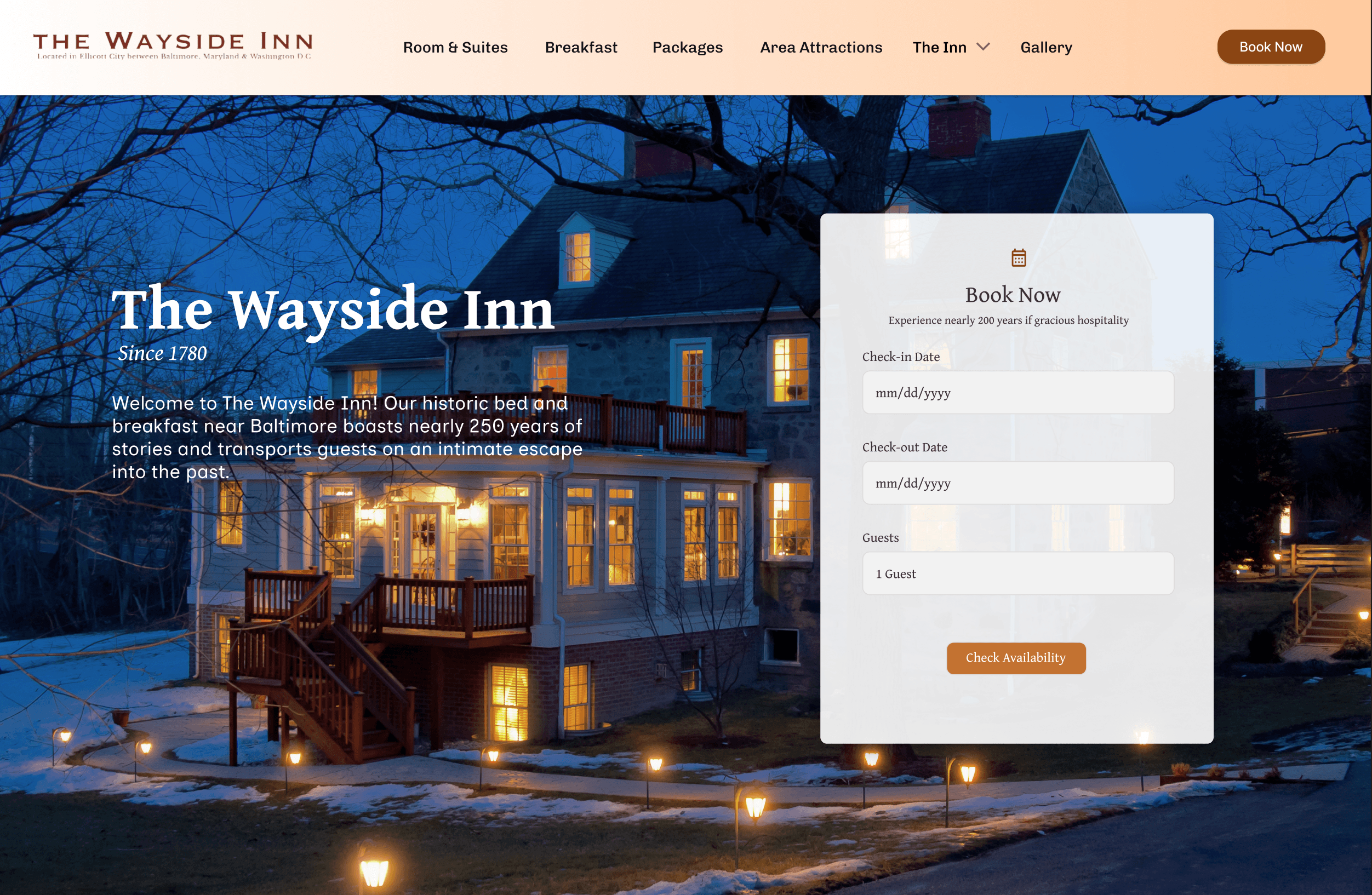
Digital redesign for a historic bed and breakfast established in 1780, focusing on heritage and booking conversion.
Role
Lead Designer
Timeline
3 Weeks
Tools
01. The Problem
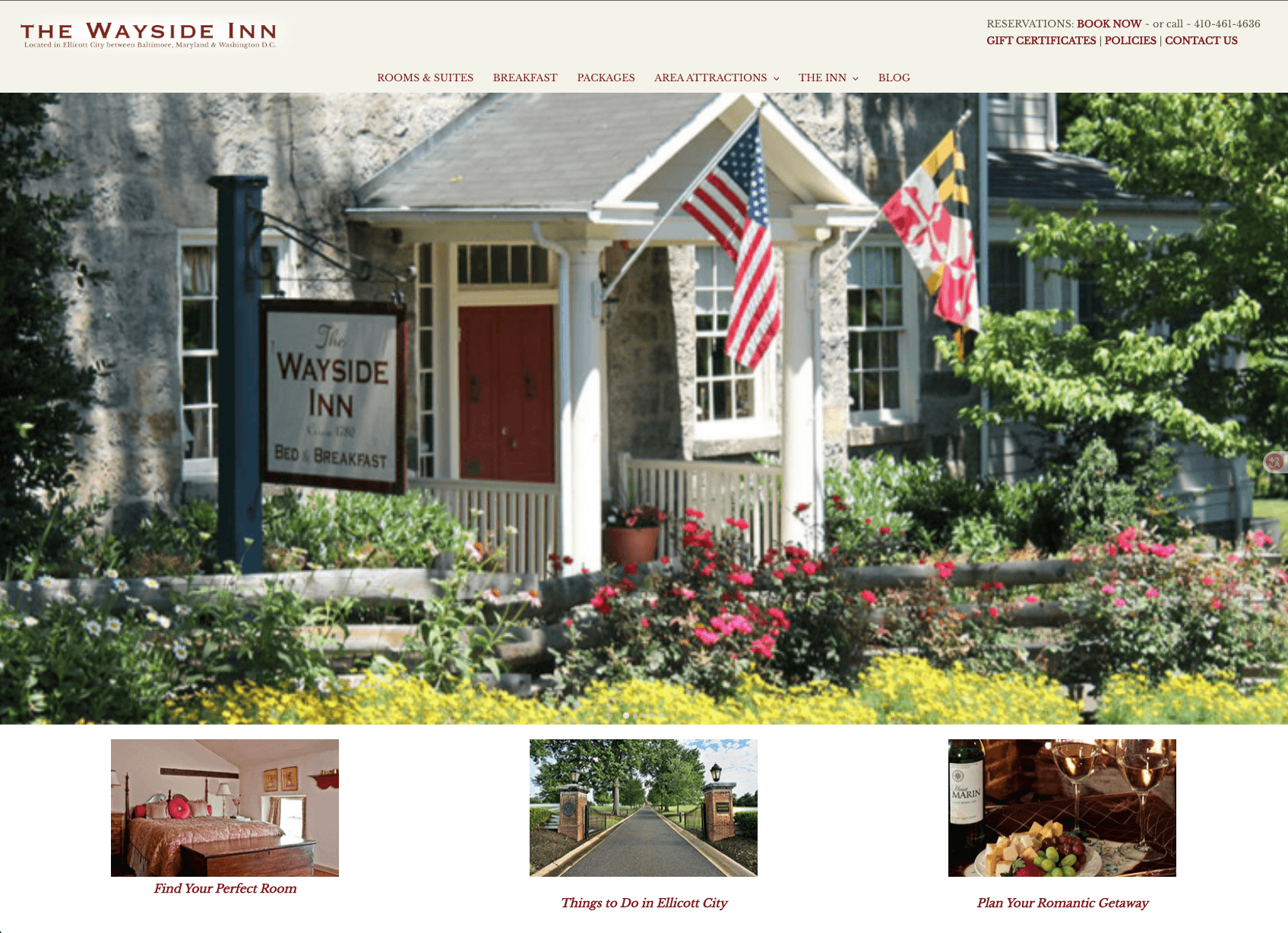
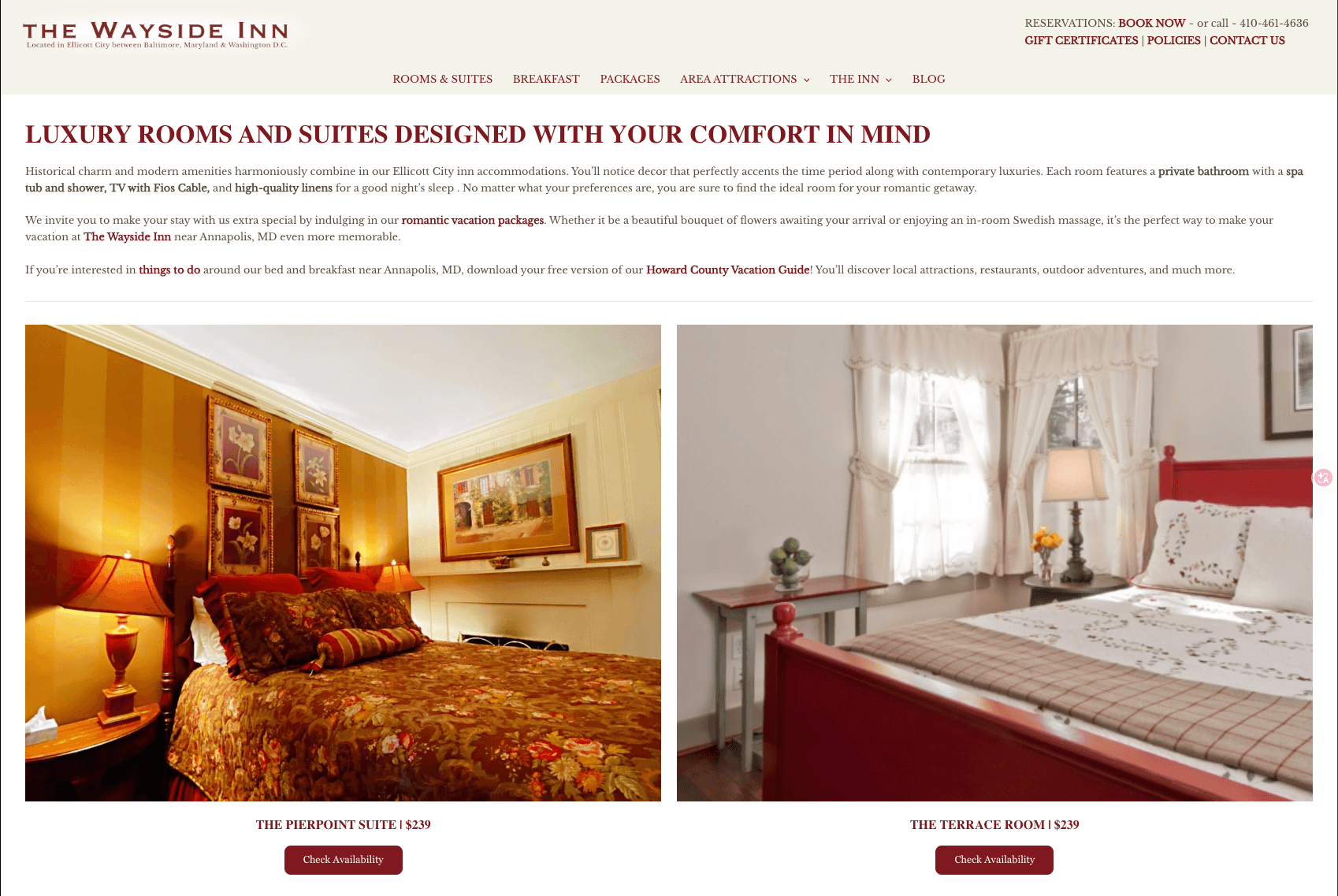
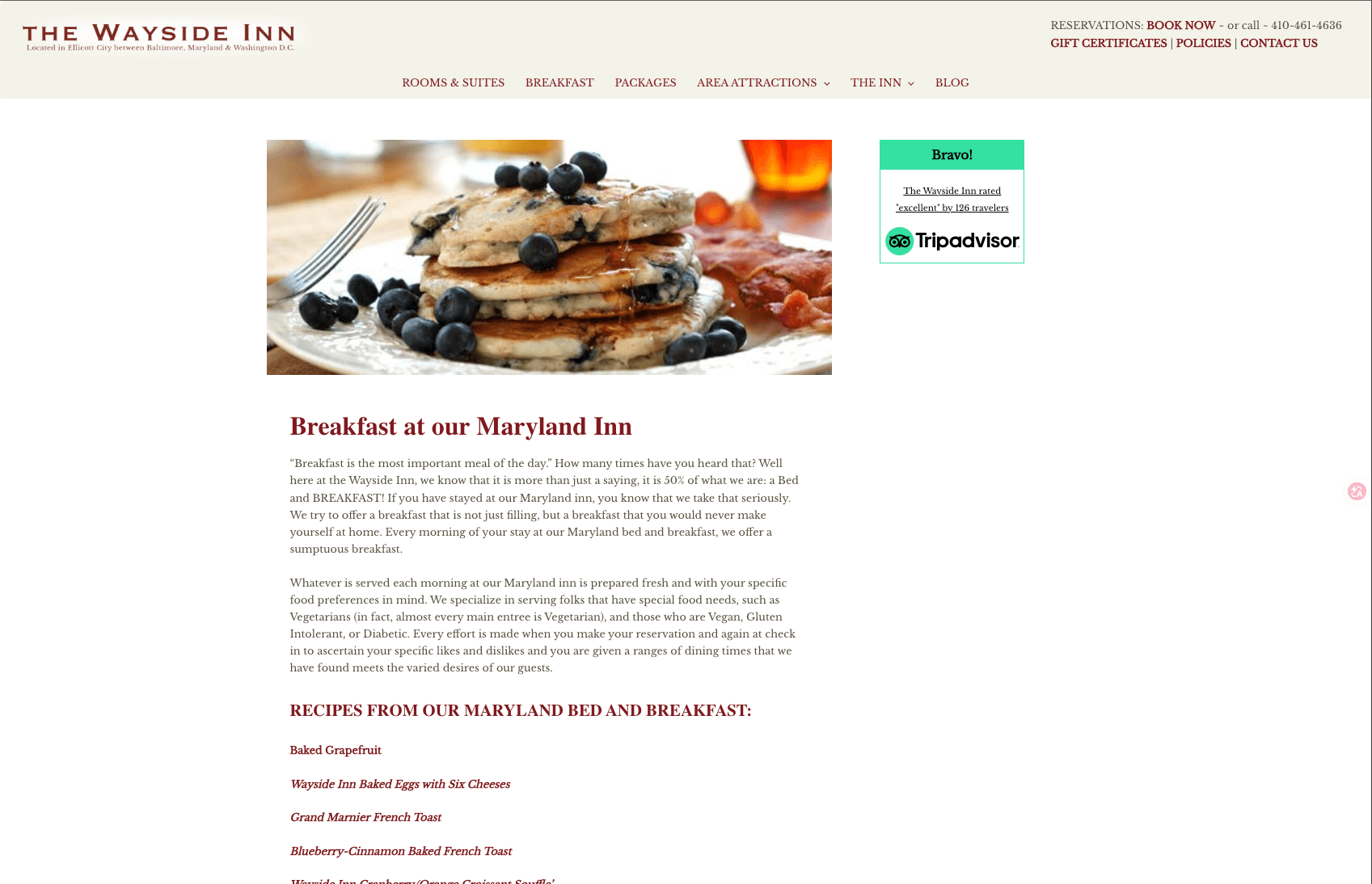
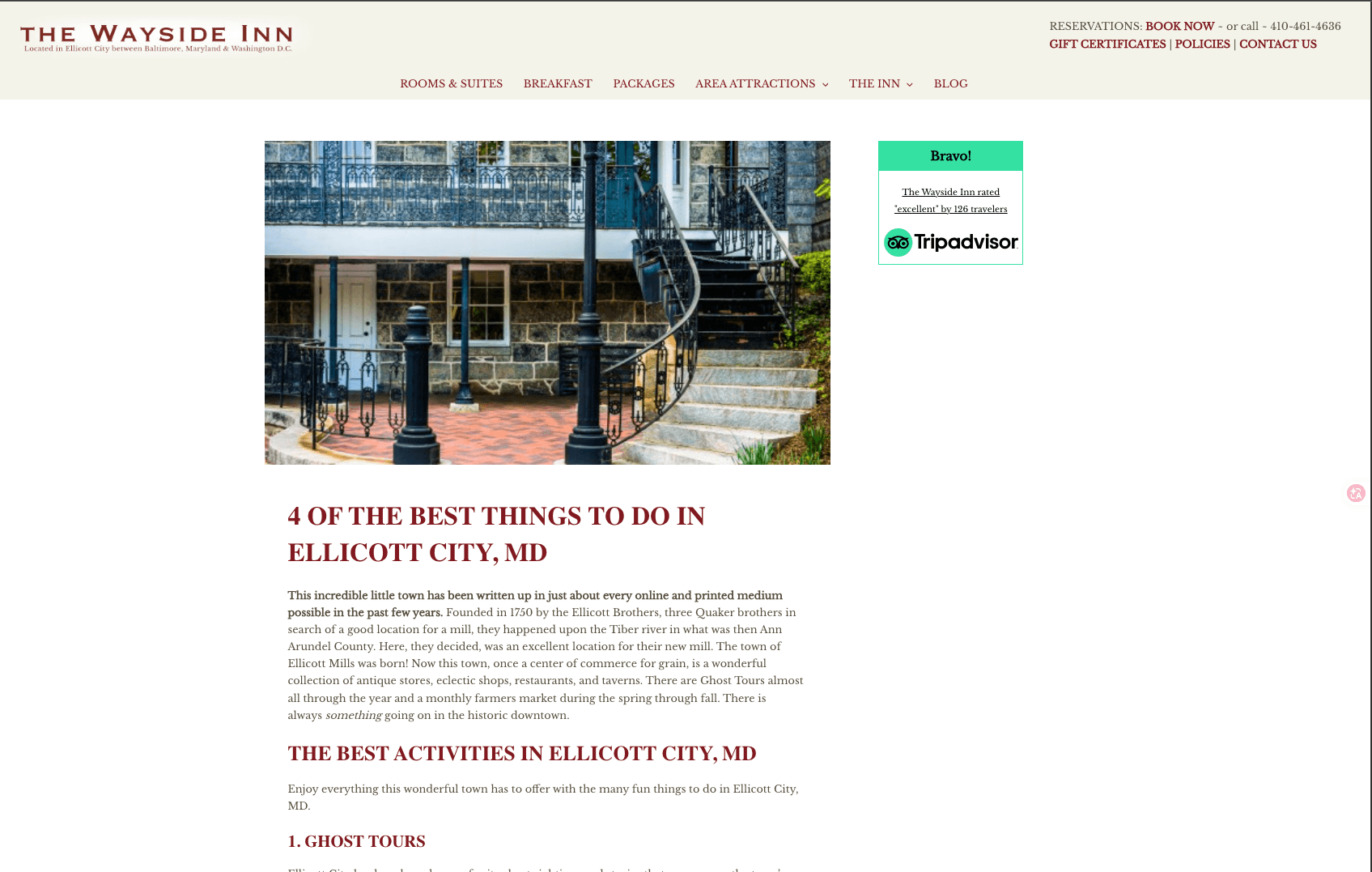
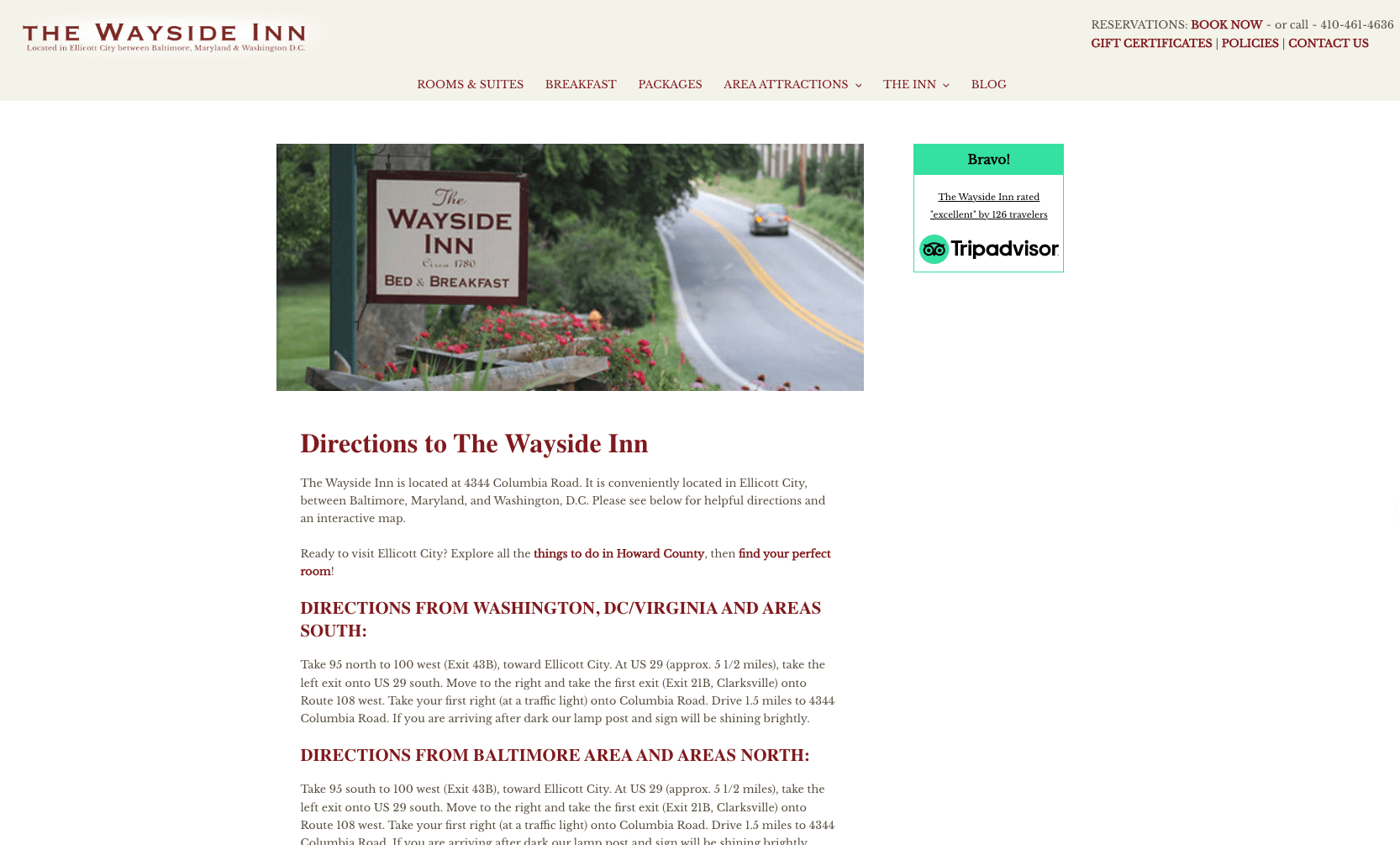
Previous Look
The previous website contained valuable information about the inn, but it did not clearly guide users toward making a reservation. Important details such as availability, pricing context, and booking steps were scattered.
- Users could not easily confirm dates, guest count, or availability upfront
- Booking actions were not visually emphasized
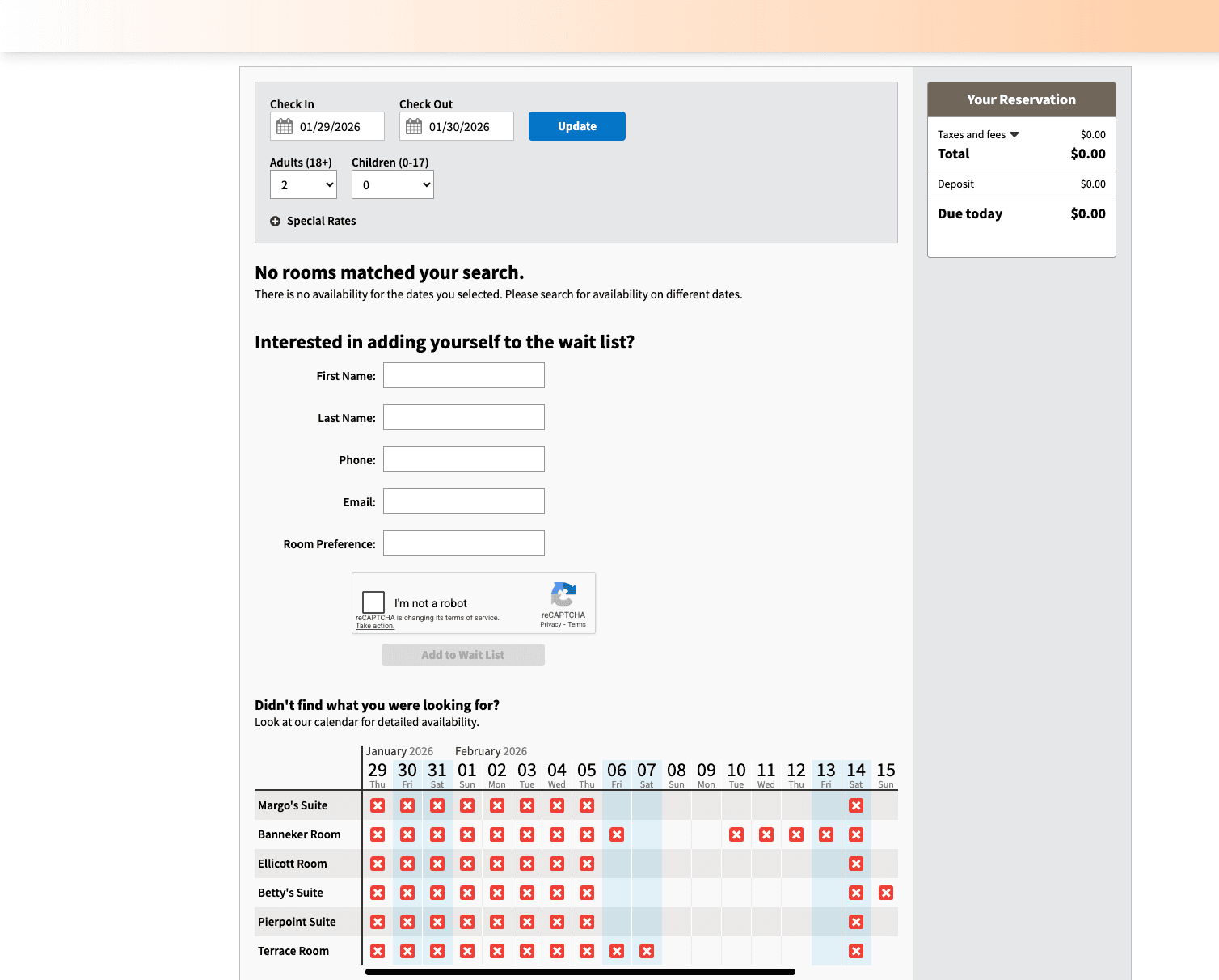
- The payment flow lacked clarity and confidence
- Packages and local offerings were underrepresented
02. Goals & Metric
Make reserving a room fast and intuitive while preserving the historic aesthetic.
Make reserving a room fast and intuitive from the homepage
Support business goals through clearer calls to action
Improve the payment experience and reduce uncertainty
Highlight packages and local experiences
Preserve the historic and traditional aesthetic
03. Research & Insights
Methods
Comparative Review, Usability Expectations
Users expect to enter date, time, and number of guests immediately.
A visible reservation entry point increases booking confidence.
Clear pricing, packages, and payment steps reduce hesitation.
A strong visual identity can preserve history while improving usability.
04. The Opportunity
"Redesign the experience so that reservation actions lead the interface, while the inn’s history and atmosphere support the decision emotionally."
Lead with reservation intent
Reduce friction in booking and payment
Use design to reinforce heritage, not compete with it
05. Solution Overview
The redesigned website introduces a reservation-first homepage, improved booking and payment flow, and richer storytelling, wrapped in a historic visual style.
- Clear entry into the reservation flow
- Strong calls to action aligned with business goals
- Trust-building content and visuals
06. Key Design Decisions
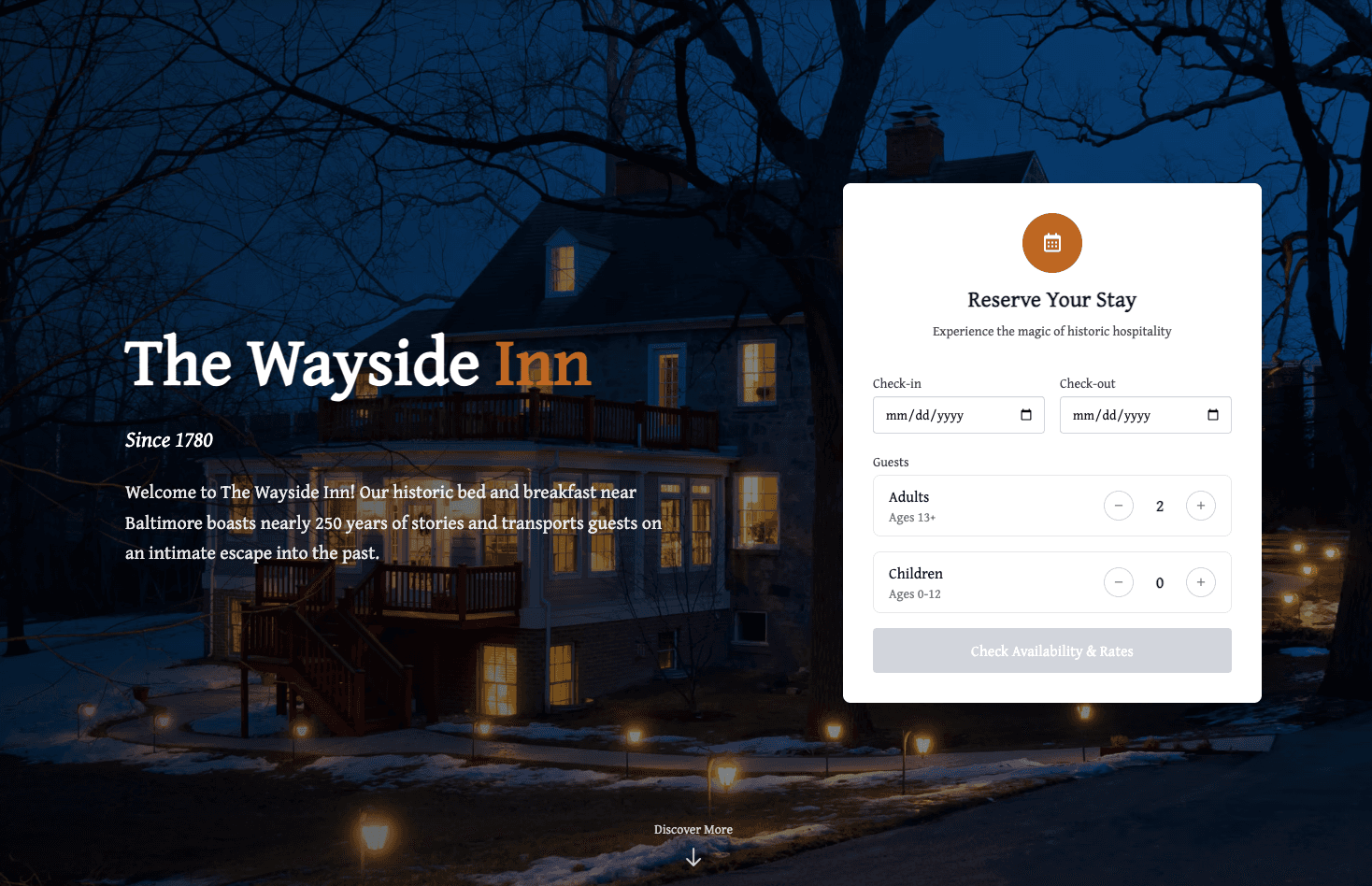
Reservation Card & Stronger Calls to Action
Users needed a fast way to check availability, and booking actions were previously easy to overlook. A reservation card was added to the homepage for immediate access, while prominent calls to action were placed consistently throughout the site to guide users.
Improved Payment System
Unclear payment steps can cause hesitation. The payment experience was redesigned to clearly communicate pricing and next steps, reducing uncertainty.
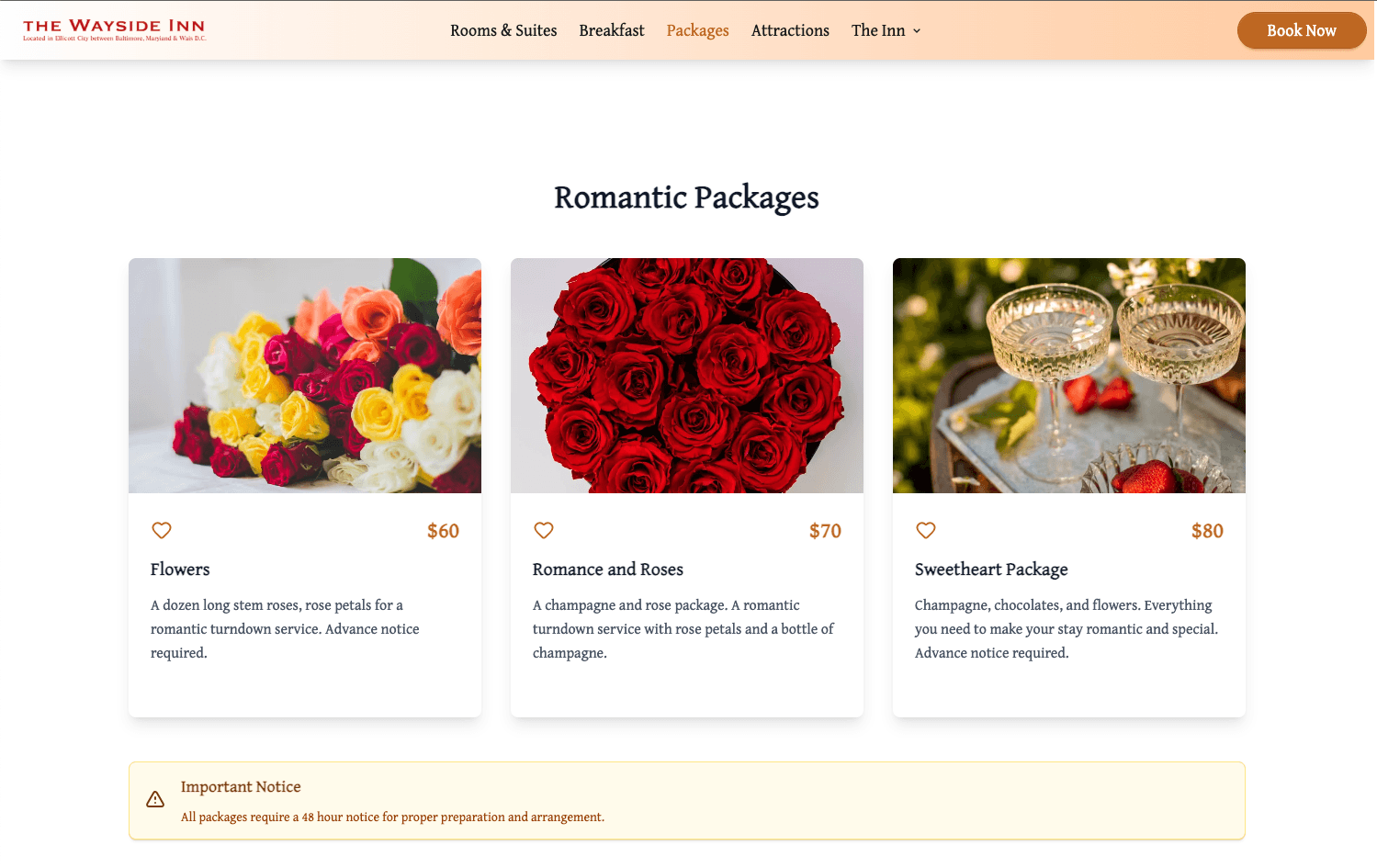
Adding Packages and Local Information
Guests often look for experiences. The site now highlights stay packages and local attractions to add value and support upsells.
07. Outcome & Impact
Results
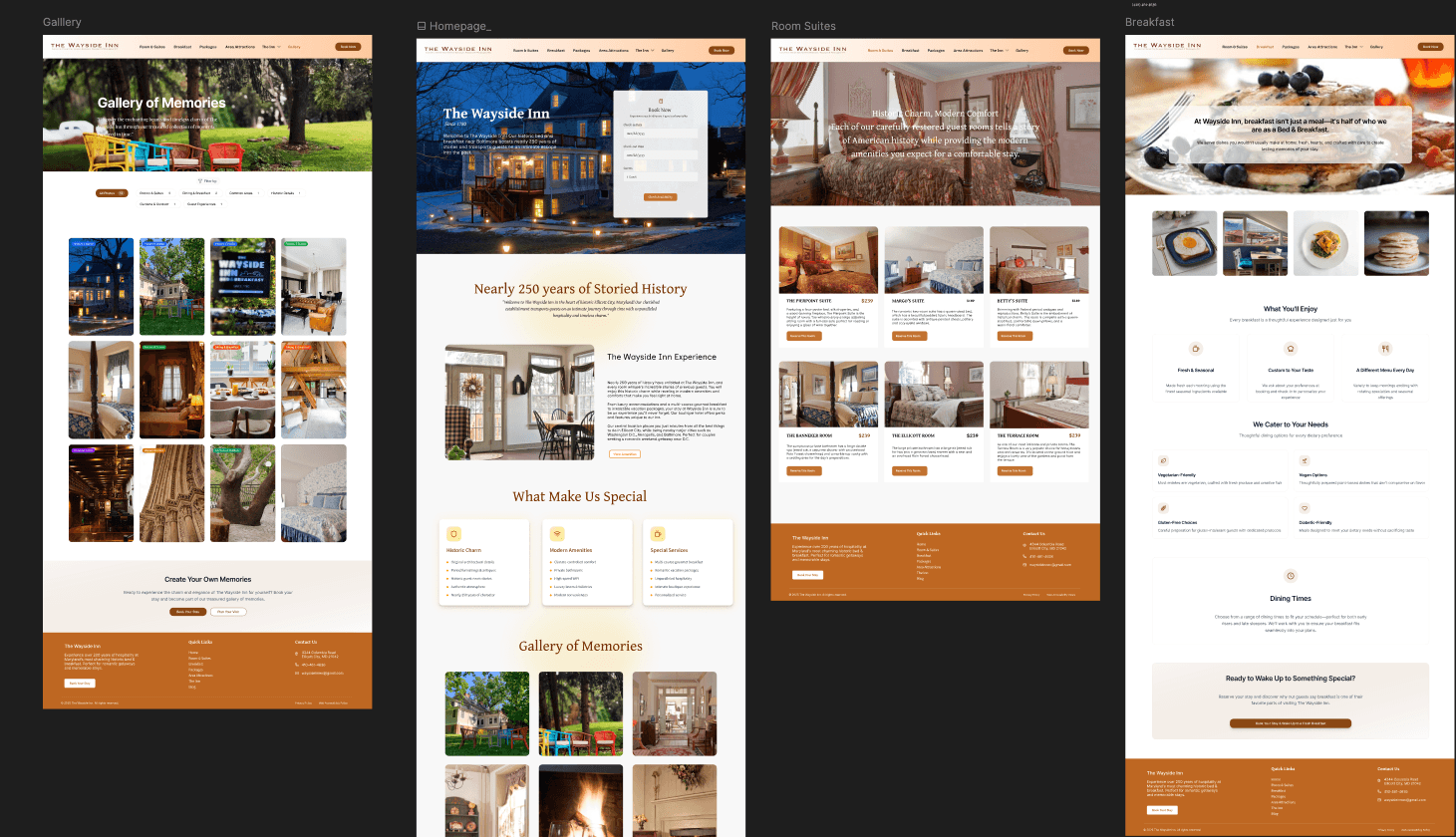
Users could quickly begin a reservation from the homepage. Clear structure reduced friction. Packages made the experience feel richer.
Impact
The redesign balanced modern usability with historical charm, supporting the business goal of increasing reservations.
08. Reflection
What I Learned
Business goals should visibly shape interface priorities. Reservation intent should guide hospitality design. A historic aesthetic can coexist with modern UX principles.
Next Steps
Test the reservation and payment flow with real guests. Optimize for mobile users. Explore accessibility for older audiences.
"This project demonstrated how a hospitality website can drive reservations, support business goals, and preserve a historic identity through thoughtful UX design."