Feldenkrais Method
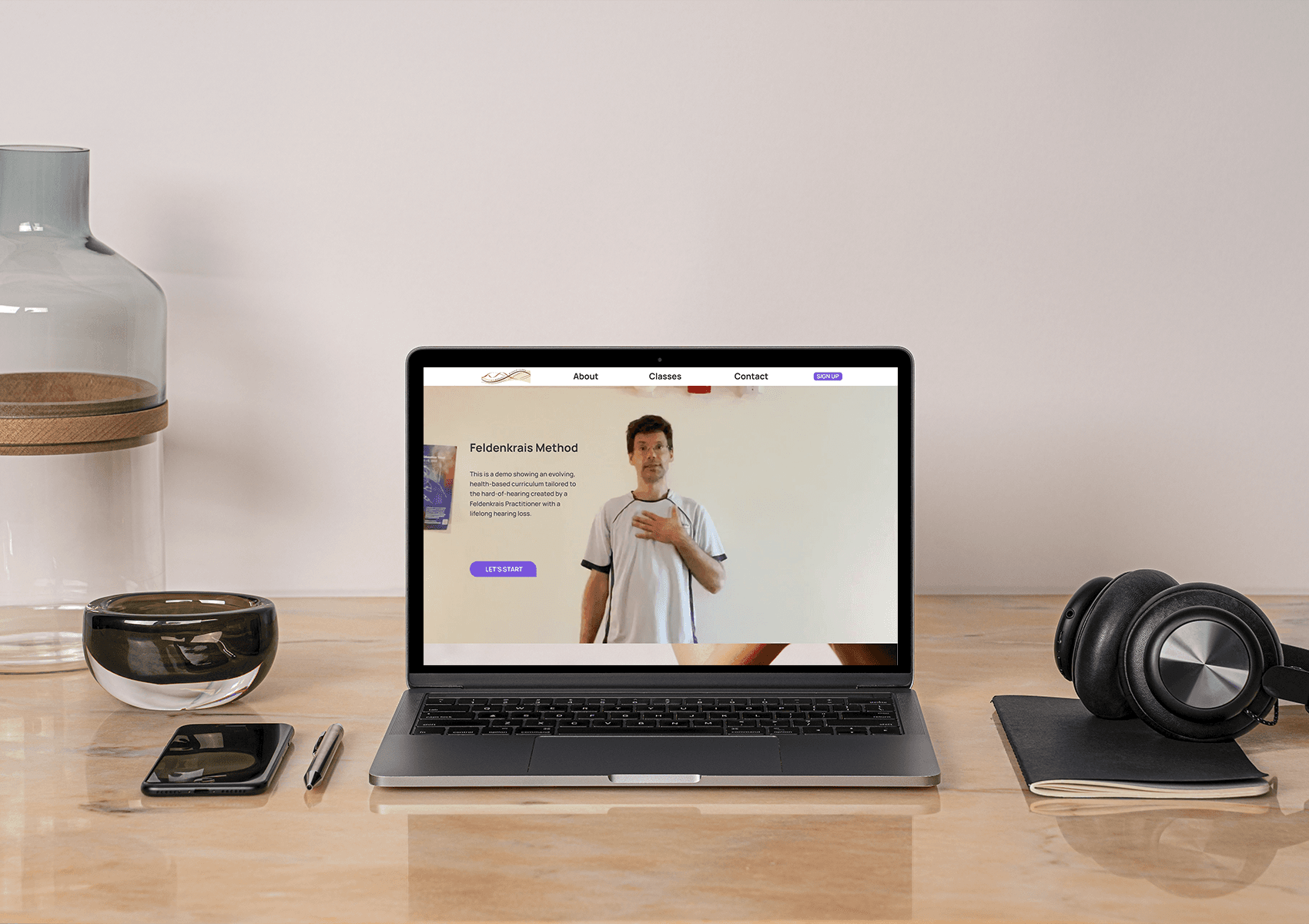
Reimagining Feldenkrais Method instruction through visual-first design
Role
Sole Designer (Research, Concept, Interaction, Prototyping, Testing)
Timeline
3 Months
Tools
Design Process
Understanding movement-based learning without sound
The Feldenkrais Method is a movement-based educational practice that relies heavily on verbal instruction. Practitioners guide learners through small, slow, and subtle movements using spoken cues that encourage body awareness and reflection. This structure works well for hearing users, but it immediately creates accessibility barriers for Deaf and Hard of Hearing (DHH) individuals—especially in online learning environments where in-person guidance is absent. Before designing anything, I needed to understand: Why Feldenkrais instruction depends so much on audio, what breaks down when audio is removed, how DHH users currently navigate movement-based learning online, and why audio-first instruction doesn’t translate.
- Users miss timing cues
- Subtle transitions are difficult to follow
- Confidence drops because users can’t confirm if they’re moving correctly
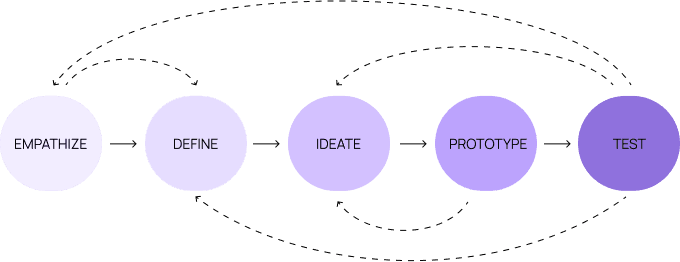
DEFINE
What do Deaf and Hard of Hearing learners actually need?
POV: To better understand user needs, I explored how Deaf and Hard of Hearing individuals engage with online educational platforms and how they adapt when audio-based instruction is unavailable.
HMW: How might we present Feldenkrais movement instruction in a way that is visually clear, accessible, and supportive for Deaf and Hard of Hearing learners—without compromising the method itself?
Goal: Rather than asking what features to add, I focused on what users needed to feel confident during movement learning.
Key insights
Methods
Focus group with seven Deaf and Hard of Hearing participants
Users rely on visual confirmation to understand subtle movement changes
Text helps reinforce motion, especially when movement is slow or gradual
Predictable pacing matters because movement requires physical and mental readiness
How might we teach movement without relying on sound?
"Accessibility in this context is not about adding captions—it’s about rethinking how instruction is communicated."
Visual-first instruction should lead, not support
Precision over decoration
Accessibility as a core requirement
DEVELOP
Exploring ways to visualize movement. I explored two different approaches to representing Feldenkrais movements, both designed with the same accessibility principles but different strengths.
- Video with Illustrative Animation: Combined recorded human movement with illustrative overlays.
- 3D Motion-Based Model: Used a 3D body model to demonstrate movements from multiple angles.
- Designing accessibility into the platform, not around it: Platform-level accessibility controls.
Exploring how to visualize movement
Using 3D models to clarify movement
Even with accessibility controls, the core challenge remained: how to clearly communicate subtle body movement. I explored two behavior visual approaches, both designed to minimize reliance on audio. One approach used a 3D body model to demonstrate movements from multiple perspectives—top, side, and front. This allowed users to understand posture and alignment more clearly, observe subtle changes in movement direction, and revisit movements from different angles as needed. The 3D model prioritized precision and spatial understanding.
Why pacing and transitions matter
During early testing, I noticed that users often paused before moving to the next section. In traditional Feldenkrais lessons, audio cues signal transitions—but those cues were inaccessible here. To address this, I introduced a visual countdown before transitioning to the next movement section. This countdown replaces audio timing cues, gives users time to prepare physically and mentally, and creates a predictable and comfortable rhythm.
DELIVER
Results
The testing revealed several important patterns: Visual-first instruction significantly improved understanding, and text reinforced confidence during subtle movements.
Impact
This project showed that Deaf and Hard of Hearing users can meaningfully engage with Feldenkrais education when instruction is designed visually from the start. By shifting away from audio-first assumptions, the experience became more accessible for everyone.
What I learned
What I Learned
Accessibility in movement-based learning requires rethinking instruction, not just interface elements. Visual clarity and pacing directly impact user confidence. Designing for Deaf and Hard of Hearing users often improves usability for all learners.
Next Steps
TEST: Observing how users interact with visual-first instruction. I conducted a focus group with seven Deaf and Hard of Hearing participants. I observed how users interacted with the platform, where they paused, and when they hesitated.
"Accessible design is not about adding features—it’s about changing assumptions. When movement instruction is designed to be seen, not heard, it becomes more inclusive, intentional, and effective."